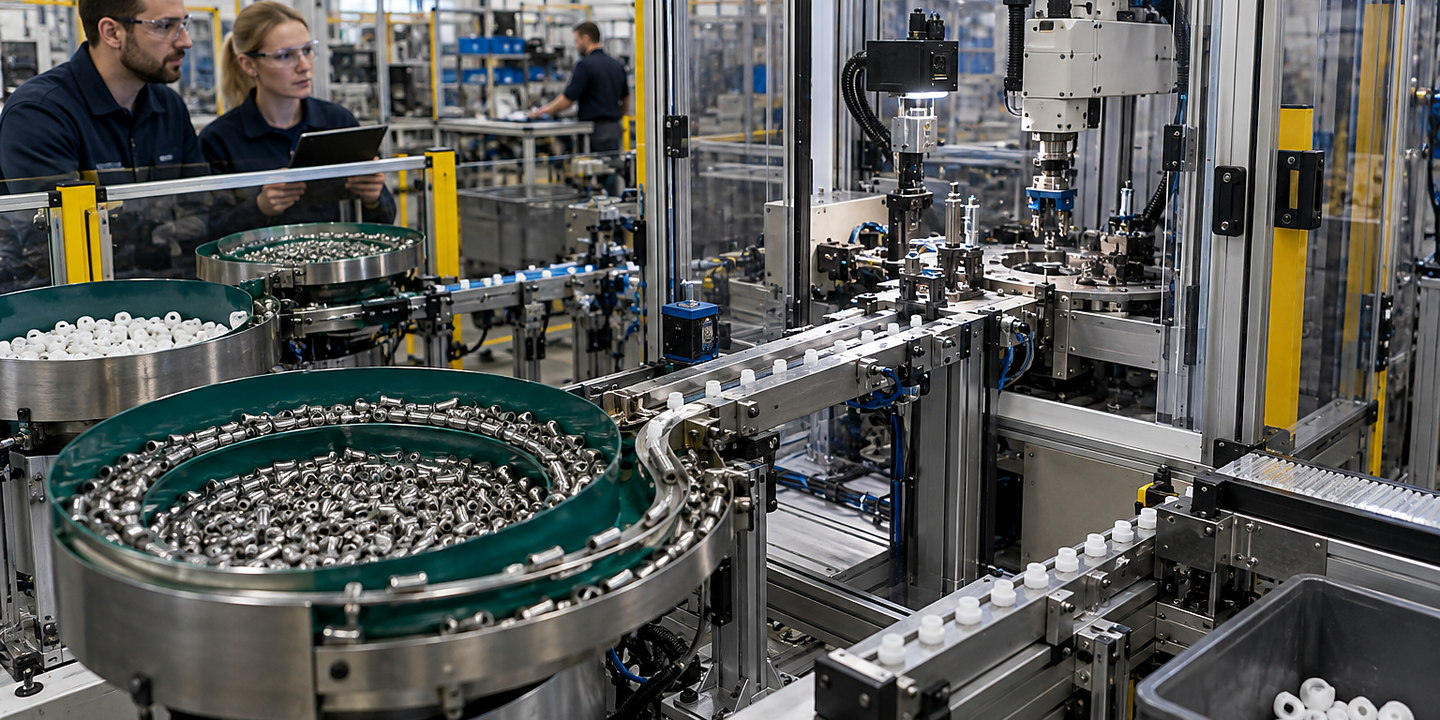
Plan filter-feeder support with protected-feature limits, identified settings, before-and-after condition records and documented recovery for incorrect presentation.
In brief
Keep the permitted component range, protected sealing faces, mesh or media, assembly orientation and accepted setup identified in the support information. Record normal bulk condition, nested-part or presentation problems and observed damage before an authorised change. Use the documented recovery and check the first accepted component and protected features afterwards.
Plan straightforward operation, maintenance and recovery — Filter Component Feeders
Plan filter component feeders around real component variation, bulk condition, orientation, usable delivery rate and the downstream interface. Discuss representative part trials with Sorting Solutions. Plan the information, access and response needed to keep your operation running safely and consistently.
Retain the agreed component range, protected-feature limits, assembly orientation, settings and current operating information. Include the documented response to a component that cannot be presented correctly and who owns the acceptance record.
Planned care
Use the approved inspection, cleaning and maintenance schedule with the actual escapement, transfer and downstream interface identified. Retain protected-feature condition observations; do not infer a maintenance interval or method from a generic feeding trial.
Fault recovery
Record the component, supplied bulk condition, nesting or presentation problem and any observed damage. Use the documented safe recovery and escalation route, then check the first accepted component and the features that must not be touched or marked.
Future changes
Review a new component or supplier condition, orientation requirement, setup or downstream interface against the permitted range. Repeat the relevant separation, transfer, protected-feature and recovery checks before extending the accepted scope.
Support information
Keep the right information about filter component feeders available to your team
Agreed filter-component presentation and feeding scope, exclusions and decisions
Current drawings, line-connection schedule and bill of materials
Software and parameter backups with revision control
Risk, test and inspection records for jam, damage and recovery acceptance checks
Operator and maintenance instructions for bulk presentation using filter-component presentation and feeding
Recommended spares based on consequence and lead time
First-line response
For Filter Component Feeders, record the equipment or process condition before making a change
Observe
Record the current state and identified setup, recent component or supplier change, normal bulk condition and the first observed nesting, damage or presentation problem. Keep incoming and handled component condition distinct.
Make safe
Use the approved isolation or intervention method for bulk presentation using filter-component presentation and feeding; never defeat a safeguard or force an output to shorten diagnosis.
Recover deliberately
Use the documented approved recovery sequence, confirm the first accepted component in the required assembly orientation and compare its protected features against the agreed check. Retain the fault, authorised action and result record.
Change control
Revisit evidence when the duty changes
A new variant or higher rate can alter component geometry and variation for filter-component presentation & feeding, surface, fragility and entanglement behaviour, bulk condition and replenishment method, required orientation and delivery rate, escapement and downstream pick interface, and jam, damage and recovery acceptance checks. Record the change, assess consequences and repeat the relevant trial or validation rather than assuming the previous result transfers.