Current condition
Identify the component, drawing and setup, normal supplied bulk condition and expected assembly orientation. Retain incoming and handled observations for the protected sealing faces, mesh or media.
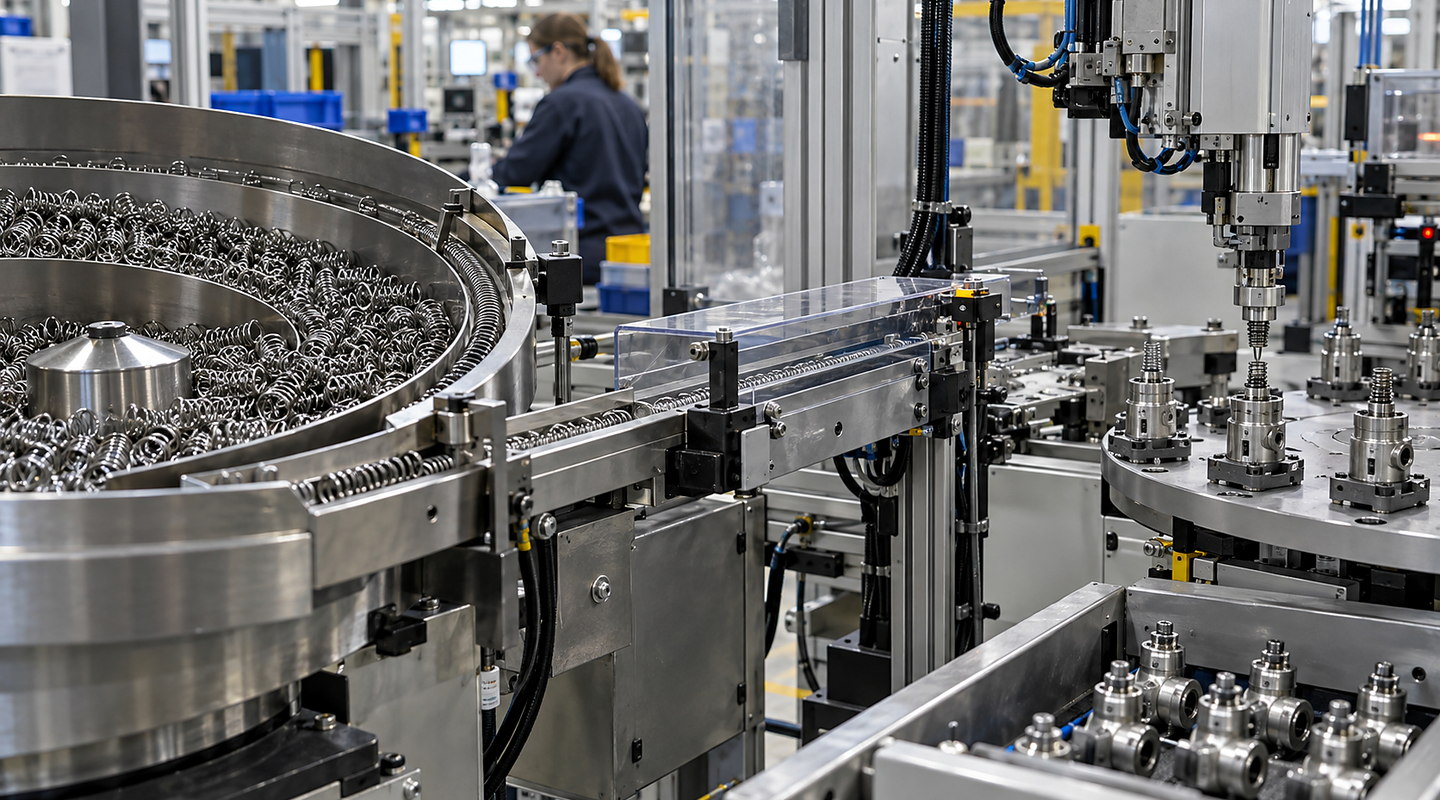
Agree filter-feeding acceptance checks for protected sealing faces, mesh or media, nested parts, usable downstream delivery, damage and documented recovery.
Agree the permitted component range, assembly orientation and sealing faces, mesh or media that must not be touched or marked before trials. Use normal bulk supply, marginal and supplier-variant parts and nested examples. Compare protected features before and after separation and transfer, recording usable downstream delivery, damage, jams and incorrect presentation separately.
Use the component-condition specification and documented support and recovery scope. Include a component that cannot be presented correctly and retain the documented recovery and first accepted result; one easy sample does not establish the complete range.
Plan filter component feeders around real component variation, bulk condition, orientation, usable delivery rate and the downstream interface. Discuss representative part trials with Sorting Solutions. Use this guide to resolve jam, damage and recovery acceptance checks before it limits the final system.
Discuss your application

Identify the component, drawing and setup, normal supplied bulk condition and expected assembly orientation. Retain incoming and handled observations for the protected sealing faces, mesh or media.
Include normal, marginal and supplier-variant components, nested parts and replenishment conditions. State the actual downstream pick or assembly interface and the protected-feature limits used in the trial.
Record usable delivery, incorrect presentation, jams and damage separately. Retain the documented recovery used for an unpresentable component and the first accepted result with the required protected-feature check.
Identify the component variant, drawing revision and normal geometry range. Include marginal and supplier-variant parts, and define the final assembly orientation before comparing presentation methods.
Mark the sealing faces, mesh or media that must not be touched or marked. Agree the before-and-after inspection of these features through separation, transfer and final presentation; correct orientation alone does not establish acceptable component condition.
Use components in their normal bulk condition and describe how they are replenished. Include nested parts in the trial and retain the observed condition rather than relying on selected loose components.
Define the orientation and usable delivery required by the downstream process. Record components accepted for that process with the required surface condition, separately from quoted output at the feeder.
Show the escapement and actual downstream pick or assembly interface. Agree support and handover requirements with the protected features identified, and check the delivered component after the complete transfer.
Record jams, damage, incorrect presentation and the documented recovery used. Include a component that cannot be presented correctly, compare protected features before and after handling, and retain the first accepted result after recovery.